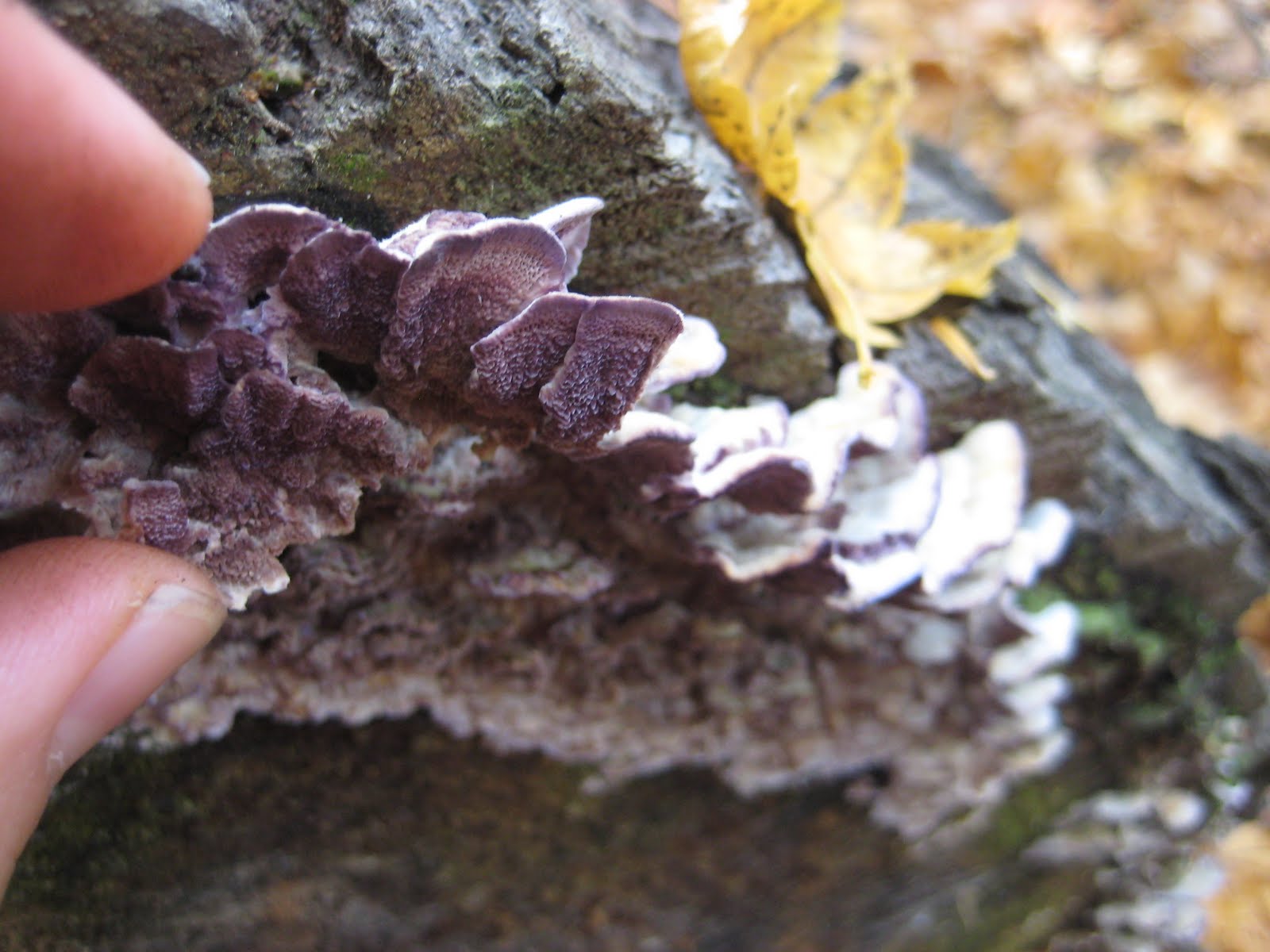
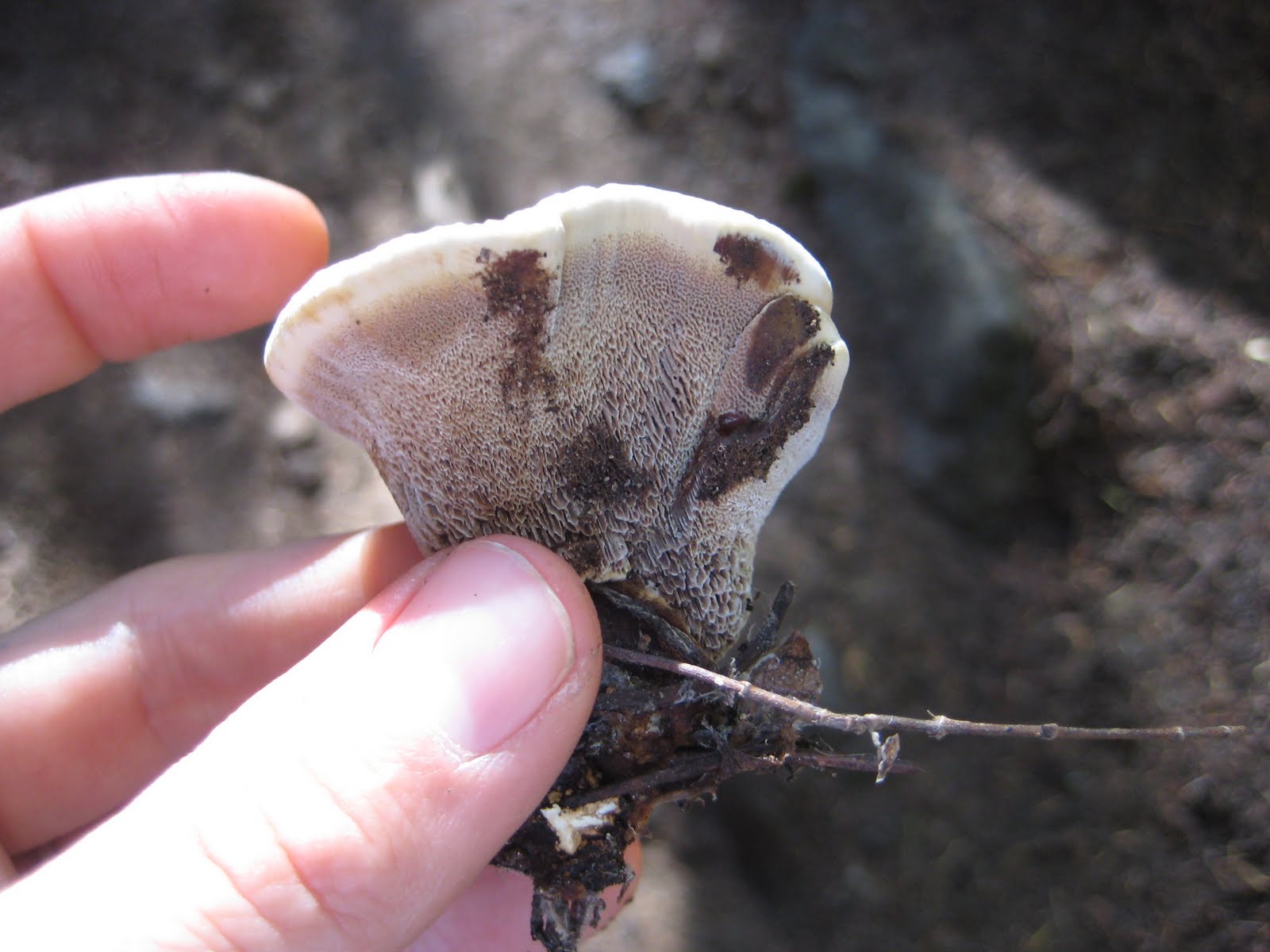
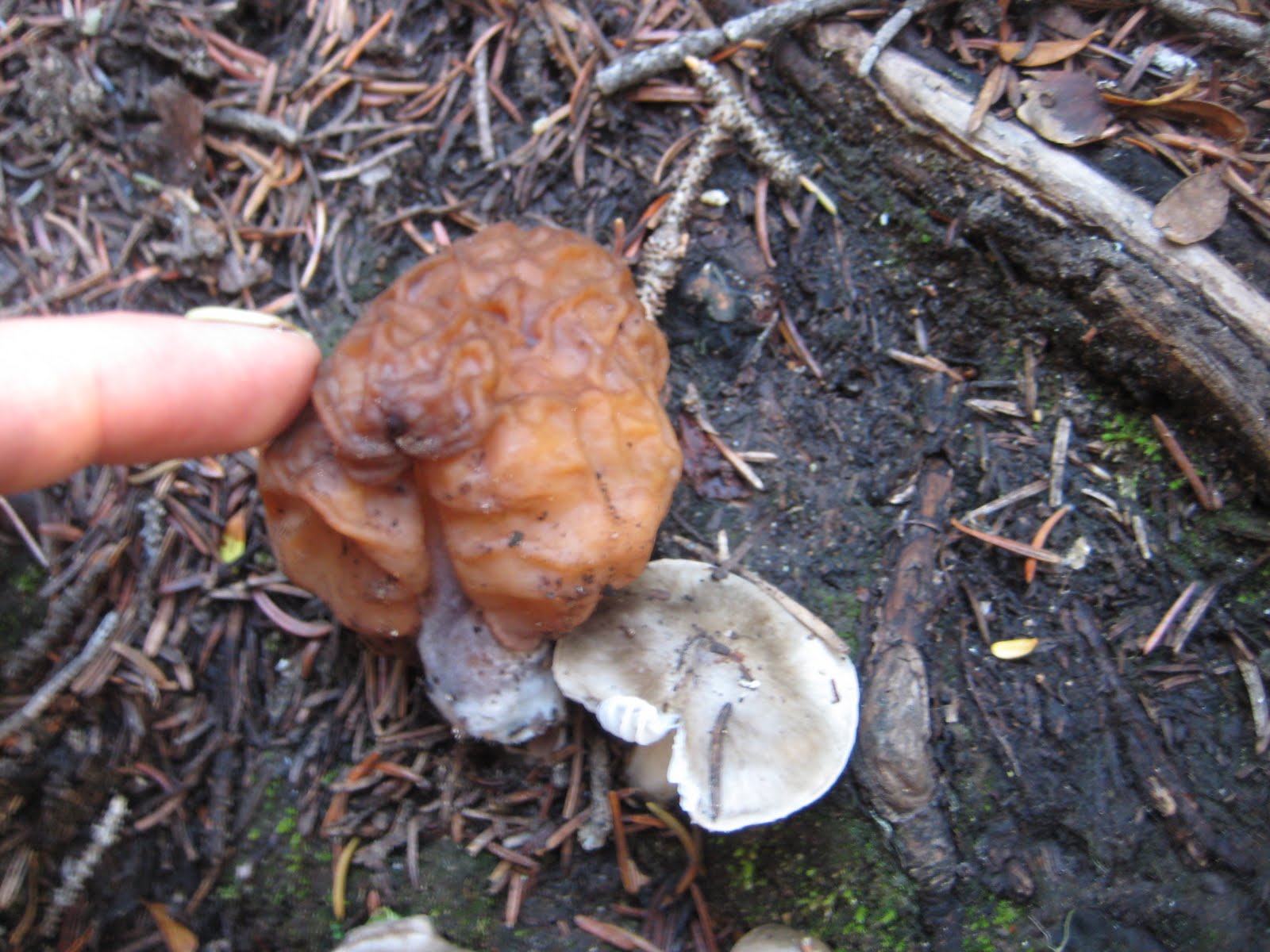
Lobster mushrooms are actually two kinds of fungi: a white mushroom, usually Russula brevipes, parasitized by the bright orange fungus, Hypomyces lactifluorum.
Hypomyces turn purple with a chemical indicator (see below).

Hypomyces lactifluorum will make a good dye, which is why I care about these funky, contorted, parasitized, stinky, mushrooms.
Some people care about lobster mushrooms as edibles. I've actually never eaten one though I plan to some day.
I care about them for dye...and I must care a lot because I have gone through the most disgusting tasks to get them into the dye pot. Unfortunately, it's mostly my fault.
To illustrate:
I got 2 boxes of past-their-prime lobsters from a mushrooming friend.
They sat outside rotting and collecting flies for 4 days until I had time to cut off the red/orange Hypomyces. This (handling rotting, slippery, raw-meat-like mushrooms pieces) in and of itself was disgusting, but it continues...
Then I boiled them (mistakenly) in our house on our stove. They put off the most horrible chemical rotting smell I have ever experienced. I also dried some of the less rotten parts for winter dyeing.
I put the whole dye pot outside to cool while I aired out the house...for 7 days.
Using a cloth bag (after work, in the dark, wearing a headlamp), I strained the chunks from the liquid and had to throw the straining bag away and wash my hair in the shower (my hair had absorbed the horrible smell).
3 weeks later (last night) I attempted to use the dye. Over the 3 weeks, I had time to plan how to use the dye. Not what to use it on - that's easy - but how to actually get through the dyeing process. I still needed to heat the dyebath and let the wool soak in the warm dye.


Hypomyces lactifluorum will make a good dye, which is why I care about these funky, contorted, parasitized, stinky, mushrooms.
Some people care about lobster mushrooms as edibles. I've actually never eaten one though I plan to some day.
I care about them for dye...and I must care a lot because I have gone through the most disgusting tasks to get them into the dye pot. Unfortunately, it's mostly my fault.
To illustrate:
I got 2 boxes of past-their-prime lobsters from a mushrooming friend.

They sat outside rotting and collecting flies for 4 days until I had time to cut off the red/orange Hypomyces. This (handling rotting, slippery, raw-meat-like mushrooms pieces) in and of itself was disgusting, but it continues...

Then I boiled them (mistakenly) in our house on our stove. They put off the most horrible chemical rotting smell I have ever experienced. I also dried some of the less rotten parts for winter dyeing.

I put the whole dye pot outside to cool while I aired out the house...for 7 days.
Using a cloth bag (after work, in the dark, wearing a headlamp), I strained the chunks from the liquid and had to throw the straining bag away and wash my hair in the shower (my hair had absorbed the horrible smell).
3 weeks later (last night) I attempted to use the dye. Over the 3 weeks, I had time to plan how to use the dye. Not what to use it on - that's easy - but how to actually get through the dyeing process. I still needed to heat the dyebath and let the wool soak in the warm dye.
My idea: use our car camping propane stove at the nearby neighborhood park, hahahaha!
Ideally, wearing a hazmat suit.

Results:
Though Adam and I had a nice night at the park

on the slack line

while the dye pot simmered,

I must say I am bummed to not have gotten the dark purple colors I was hoping for. Many people mention getting cinnamon pink colors, which it probably a fitting description for what I have.

I dipped half of the skein in iron mordant (blue while wet, orange when dry) and the other half was alum mordant.